

A Different Way To Love
We live in a world that teaches us to view relationships through a contractual lens. Contracts are built on conditional transactions saying “I will do my part if you do yours” and “what will I get out of this relationship?” and “how will this relationship benefit me?”
Contractual relationships are not built to last, because if one party fails to meet expectations and terms of agreement, then the relationship is questioned or dissolved completely.
While contracts may have a place and a purpose in business, Scripture invites us into something more, something deeper in our relationships. Scripture calls us to view our relationships not as contracts, but rather as covenants. Throughout Scripture, God consistently relates to His people through covenant. From Abraham to Israel to the New Covenant established through Christ, God’s posture toward His people is not contractual or transactional, but rather relational.
We see this specifically outlined in Jeremiah 32:38-41:
“And they shall be my people, and I will be their God. I will give them one heart and one way, that they may fear me forever, for their own good and the good of their children after them. I will make with them an everlasting covenant, that I will not turn away from doing good to them…”
These verses reveal God’s heart for us as His people and therefore how we should view and relate to each other. The passage tells us that covenant relationships are about belonging, faithfulness, and everlasting love.
When we begin to view our marriages, friendships, work relationships, family relationships, and church communities through a covenant lens, the question shifts from “What will I get out of this relationship?” to “How can I faithfully love and show up for them?”
What Covenant Love Creates
The field of psychology offers a helpful framework known as the 4 S’s of secure, covenant relationships. The 4 S’s were coined by neuropsychiatrist Dr. Daniel Siegel, who has spent his life researching the impact of relationships on the human brain.
His research found that when people feel Seen, Safe, and Soothed, they ultimately become Secure in relationships. Scripture gives us beautiful examples of these same principles lived out through covenant love.
Seen
From the moment we are born, we are searching for someone who is searching for us. When we are fully seen we are truly known, valued, and understood. We can see God’s desire for us to be seen by Him in Psalm 139:1-3:
“O Lord, you have searched me and known me…You discern my thoughts from afar”
and again in Genesis 16:13:
“You are the God who sees me.”
In looking at the relationship of Naomi and Ruth. When Naomi becomes a widow and loses all of her family, Ruth sees Naomi in her grief and chooses commitment over convenience. Her relationship with Naomi is not based on personal gain. Ruth shows Naomi she is searching for her.
Safe
Safety in relationships is created when people know they can be honest in a relationship without fear of rejection, humiliation, or abandonment and instead experience acceptance, protection and freedom to show up as fully themselves.
We see safety exhibited in the Bible in the friendship between Jonathan and David. With Jonathan being the son of King Saul and therefore the heir to the throne, he protects his friend David time and again from his own father so that God’s will of David becoming King may come to fruition. Jonathan viewed this friendship as a covenant, exhibiting faithful commitment, protecting David so he can fulfill God’s will for his life, sacrificing his own benefit of being heir.
Soothed
“The God of all comfort…comforts us in all our troubles, so that we may comfort those in any trouble.” 2 Corinthians 1:3-4.
Rather than trying to fix every problem, covenant love offers presence, comfort, and compassion in times of distress. We see a biblical example of this in a marital relationship in Songs of Solomon 2:6 when the beloved says,
“His left arm is under my head and his right arm embraces me.”
This passage reflects the deep human need and desire to be comforted. These words are repeated throughout the book, and demonstrate the importance and power in the consistency of presence. The beloved is not trying to fix problems, but rather is showing comfort, connection, and faithful love through presence.
Secure
Security is a culmination of the above and occurs over time, with consistency. Secure relationships foster dependability and confidence that the relationship will persevere even through difficult circumstances. Ruth offers this to Naomi, and Jonathan to David through their faithful commitment to the other.
Repair Is Part of Love
If you have found yourself in more contractual relationships than covenant relationships, the good news is it’s never too late. Security also happens through repair. When there is a rupture or a break in connection, we tend to move into shame and hiding much like Adam and Eve in the garden after eating from the Tree of Knowledge.
Repair occurs when we move towards someone rather than away. If you sense a rupture in a relationship, one way to move toward repair is to say “I feel some distance between us lately. I may be wrong but our relationship matters more to me than being right.”
Another example is a friend shares something important but the friend they are sharing with is distracted. A contractual response may be “I didn’t do anything wrong.” A repair response looks like, “I can see that when I was distracted you did not feel seen or heard and you may have felt unimportant. I’m sorry for not being fully present. What you share matters to me. Please tell me again, I’d like to understand.”
Building security through repair, by helping the other person to feel seen, safe, and soothed, is taking accountability for yourself, your actions, and how you are contributing to the relationship dynamic.
A couple questions to consider this week: What can you take ownership for in your own relationships? Where is there room for repair to take a step toward covenant?
Love Like You've Been Loved
We are called to love and let ourselves be loved.
God’s constant pursuit of His people through covenant, through comfort, and through faithfulness, shows us that God wants his people to be seen, safe, soothed, and secure with Him.
We are called to enter into covenant relationships with one another. To allow ourselves to be seen by God, safe with God, soothed by God, and secure with God, allows us to extend the same to others.
Grace Counseling
Hope and healing continue to reach beyond our church walls through Grace Counseling. So far in 2026, the ministry has served more than 1,000 people through nearly 6,000 counseling appointments, helping individuals, couples, children, and families take meaningful steps toward wholeness.
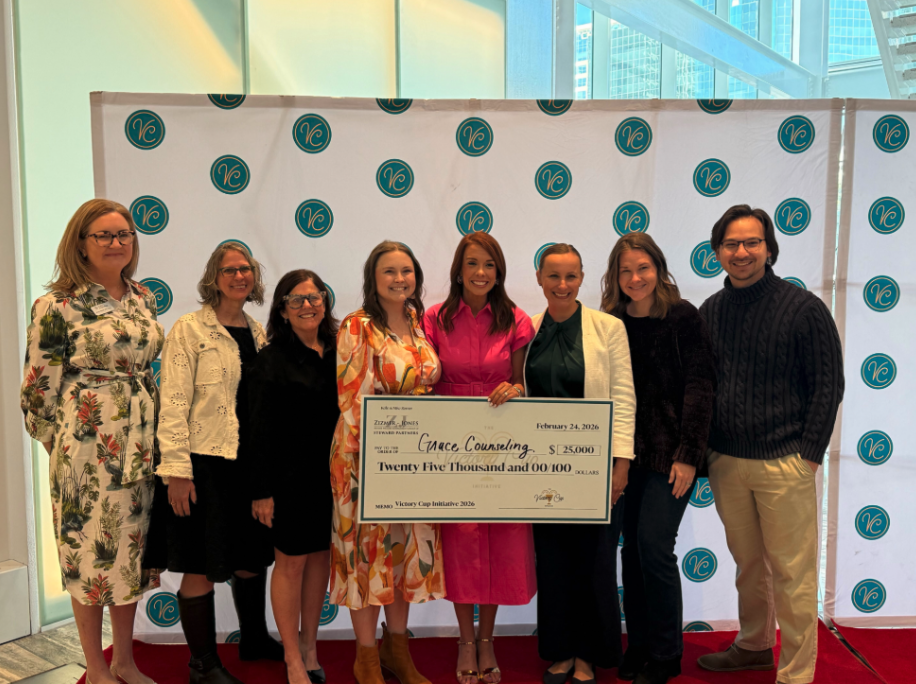
This year, Grace Counseling expanded its reach through a new partnership with the Boys & Girls Club in Eatonville, providing on-site counseling and support for local students in a familiar and trusted environment. The ministry was also recognized as a Top 10 finalist in the Victory Cup Initiative and earned second place among more than 150 nonprofits across Central Florida, helping bring greater awareness to the need for accessible mental health care in our community.
As demand continues to grow, Grace Counseling remains committed to making high-quality counseling more affordable and accessible for people across Central Florida.